
CHF 2,190 a semester
ETH Zürich’s higher tuition group
From autumn 2025; fee-group exemptions apply.
ETH Zürich · tuition feesSTUDY ABROAD / CH
Sorgfalt / Sorgfalt — care taken deliberately. The habit of doing a thing properly rather than quickly.
A Zurich lab. A Lausanne design studio. A project you keep refining until it works. Switzerland brings research and hands-on learning into close conversation. Find your language, your institution and a budget that makes room for life beyond the classroom.
Guide checked · Official sources
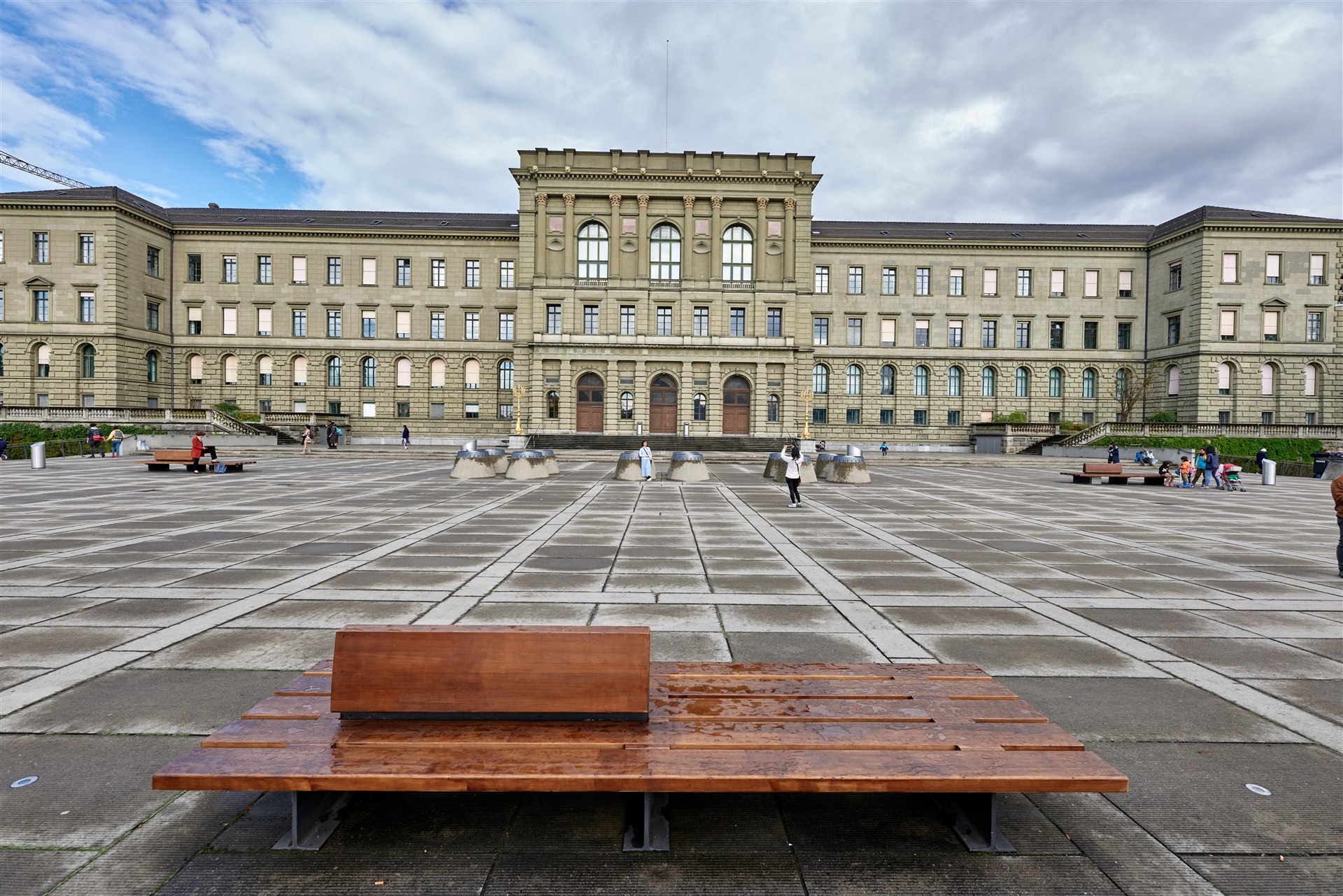

Leonhard Lenz · CC0 1.0 · Display cropped
From autumn 2025; fee-group exemptions apply.
ETH Zürich · tuition feesGenerally after six months, with the required approvals.
State Secretariat for Migration · working FAQStudy and living costs for an international student in Zurich.
ETH Zürich · study and living costs for international students01 / YOUR STARTING POINT
Choose the closest match. Use it to plan your next checks, not as an admission decision.
Swiss bachelor's programmes are overwhelmingly taught in the language of their region — German, French or Italian. English at undergraduate level is the exception, not the rule, so the map narrows quickly once you are honest about your language.
swissuniversities · accredited Swiss higher education institutionsAdmission is decided institution by institution and country by country. A qualification accepted at one Swiss university may need a preparatory year or an entrance examination at another.
02 / THE REAL COST
Compare your actual tuition group, city budget and permissions for practical experience.
ETH Zürich lists tuition of CHF 730 or CHF 2,190 per semester, depending on the student’s fee group. The higher rate applies from autumn 2025, with transition and status-based exemptions. Ask ETH to confirm your classification; other institutions set their own fees.
ETH Zürich · tuition feesETH's own published estimate for an international student puts annual study and living costs at about CHF 25,200 in the lower fee group and CHF 28,100 in the higher one, with roughly CHF 11,300 of that rent and CHF 7,200 food. Health insurance for a non-EU student adds around CHF 1,320 a year.
ETH Zürich · study and living costs for international studentsStudents from outside the EU and EFTA may work a maximum of 15 hours a week outside holidays, and no sooner than six months after the course starts. The cantonal authority must approve it, the university must confirm the work will not delay your studies, and the employer must apply. Budget the first semester with no earnings at all.
State Secretariat for Migration · working FAQ03 / MAKE THE NUMBERS YOURS
Change the example figures to match your shortlist. See the expenses and the cash you may need to set aside.
An illustrative first year in Swiss francs, built on the federal-institute foreign rate of CHF 2,190 for each of two semesters. A cantonal university or a university of applied sciences will differ, sometimes substantially, so replace this line with your own institution's figure. Monthly living follows ETH's published components for Zurich. The deposit assumes a Swiss rental deposit, commonly up to three months' rent and refundable at the end of a tenancy. Living costs and arrival allowances are planning assumptions, not quotes. A housing deposit is cash needed upfront; its return depends on the tenancy terms and any deductions.
YOUR FIRST-YEAR PICTURE
Living costs × 12 + tuition + other fees + arrival costs. The deposit is added separately as money to set aside.
This example deducts no unawarded scholarship or income from a job you have not secured.
04 / FUNDING THE MOVE
Start with an affordable study plan. Then explore funding that matches your background.
The federal institutes place every student in a fee group, and a student assigned to the higher group may request reallocation to the lower one, with documentation of qualifying residence status, by the Sunday before the semester starts. If you have any Swiss or Liechtenstein residence history, establish this before you accept a place.
Read the tuition rulesSwiss Government Excellence Scholarships mainly support early-career researchers who already hold a master’s degree; separate art scholarships can support a first artistic master’s for applicants from selected countries. Country, age, academic-supervisor and intake rules apply. Use the current country-specific application instructions; the application itself is free.
Read the scholarship rulesBecause work is barred for the first six months and capped at 15 hours a week thereafter, the first semester must be fully funded from confirmed resources. Assemble tuition, rent, insurance and food for twelve months, and treat any later job as a contribution to spending money.
Check the work rulesSTUDY. WORK. UPSKILL.
Understand the study-related options, then prepare for the next stage.
Students from outside both the EU and EFTA generally need to wait six months before ordinary student employment, then may work up to 15 hours weekly outside holidays, with university confirmation and the required cantonal and employer approvals. Academic roles and compulsory placements can have specific rules.
State Secretariat for Migration · working FAQGraduates from outside the EU/EFTA have a six-month period after completing a Swiss higher-education qualification to seek a suitable job. Employment still needs approval. The graduate exception to worker priority depends on significant academic or economic interest; a degree does not guarantee a permit.
State Secretariat for Migration · working FAQBecause the graduate exception turns on academic or economic interest, what you do during the degree is the argument. Laboratory work, industry projects and a supervisor who will vouch for you matter more here than a broad application campaign.
State Secretariat for Migration · admission to the Swiss employment market05 / FROM INTEREST TO ACTION
Start at the step that matches where you are. Course dates and your circumstances set the pace.
German, French, Italian or English — it narrows the shortlist faster than anything else.
swissuniversities · accredited Swiss higher education institutionsCantonal university, federal institute or university of applied sciences.
swissuniversities · accredited Swiss higher education institutionsAt the federal institutes this is the difference between CHF 730 and CHF 2,190 a semester.
ETH Zürich · tuition feesAdmission, funds, insurance, study plan, CV and the departure confirmation.
ch.ch · living in Switzerland without gainful employmentWork is barred for six months and capped at 15 hours a week afterwards.
State Secretariat for Migration · working FAQ06 / KEEP YOUR PLAN CURRENT
Reviewed guidance and official publishers to follow as your plan develops.
FROM AUTUMN 2025
ETH Zürich and EPFL now charge foreign students who move to Switzerland to study three times the standard rate — CHF 2,190 a semester against CHF 730 — with students enrolled before autumn 2025 exempted. Confirm your fee group before accepting an offer, and ask about reallocation if you have Swiss residence history.
ETH Zürich · tuition feesReviewed 12 September 2026WORK PERMISSION
Ordinary student employment for non-EU/EFTA applicants generally starts only after six months, with a 15-hour term-time limit and approvals. Confirm any exception for an academic role or required placement with the canton and university.
State Secretariat for Migration · working FAQReviewed 12 September 2026For the latest published notices, visit Swiss State Secretariat for Migration. Read the date, eligibility and deadline on each announcement.
The reviewed guidance above is a dated reference. New announcements do not automatically change the page’s advice.
THE QUESTIONS THAT MATTER
Useful answers to bring into your next conversation.
Tuition is low by international standards, but the federal institutes tripled the rate for foreign students who move to Switzerland to study, from CHF 730 to CHF 2,190 a semester, from autumn 2025. Living costs, not tuition, are what make Switzerland expensive.
ETH Zürich · tuition feesYOUR NEXT MOVE, WITH STAAR
Tell us where you are today. We’ll help you explore what comes next.
SOURCE NOTES
Reviewed 12 September 2026. Course, funding and immigration rules can change. Use the current rules for your nationality, residence and intake.
Student residence conditions: admission, funds, insurance, study plan, CV and departure confirmation.
State Secretariat for Migration · working FAQThe 15-hour limit, the six-month waiting period and the required approvals.
State Secretariat for Migration · admission to the Swiss employment marketQuotas, precedence, qualification requirements and the Swiss-graduate exception.
ETH Zürich · tuition feesThe CHF 730 and CHF 2,190 fee groups, the autumn 2025 change, exemptions and reallocation.
ETH Zürich · study and living costs for international studentsPublished annual totals and the rent, food, insurance and transport components.
swissuniversities · accredited Swiss higher education institutionsWhich institutions are accredited, and the university, federal institute and applied-sciences distinction.
Federal Council · tuition fees for foreign nationals to be tripledThe decision to triple fees at ETH Zurich and EPFL and who it applies to.
SERI · Swiss Government Excellence ScholarshipsCurrent award types, country eligibility and application instructions.