
English or Japanese
The decision that shapes everything else
It sets your entrance route, your prep time and your work options.
Study in Japan · Basic Guide 2025–2026STUDY ABROAD / JP
初心。 / Shoshin — 'beginner's mind': the openness you bring to learning something for the first time.
Japan asks you to decide something early: whether you will study in English, in Japanese, or spend a year getting ready to do the second. Get that right and the rest — the university, the entrance route, the city — follows from it. Ginkgo avenues in Hongo, laboratories in Sendai, design studios in Kyoto.
Guide checked · Official sources
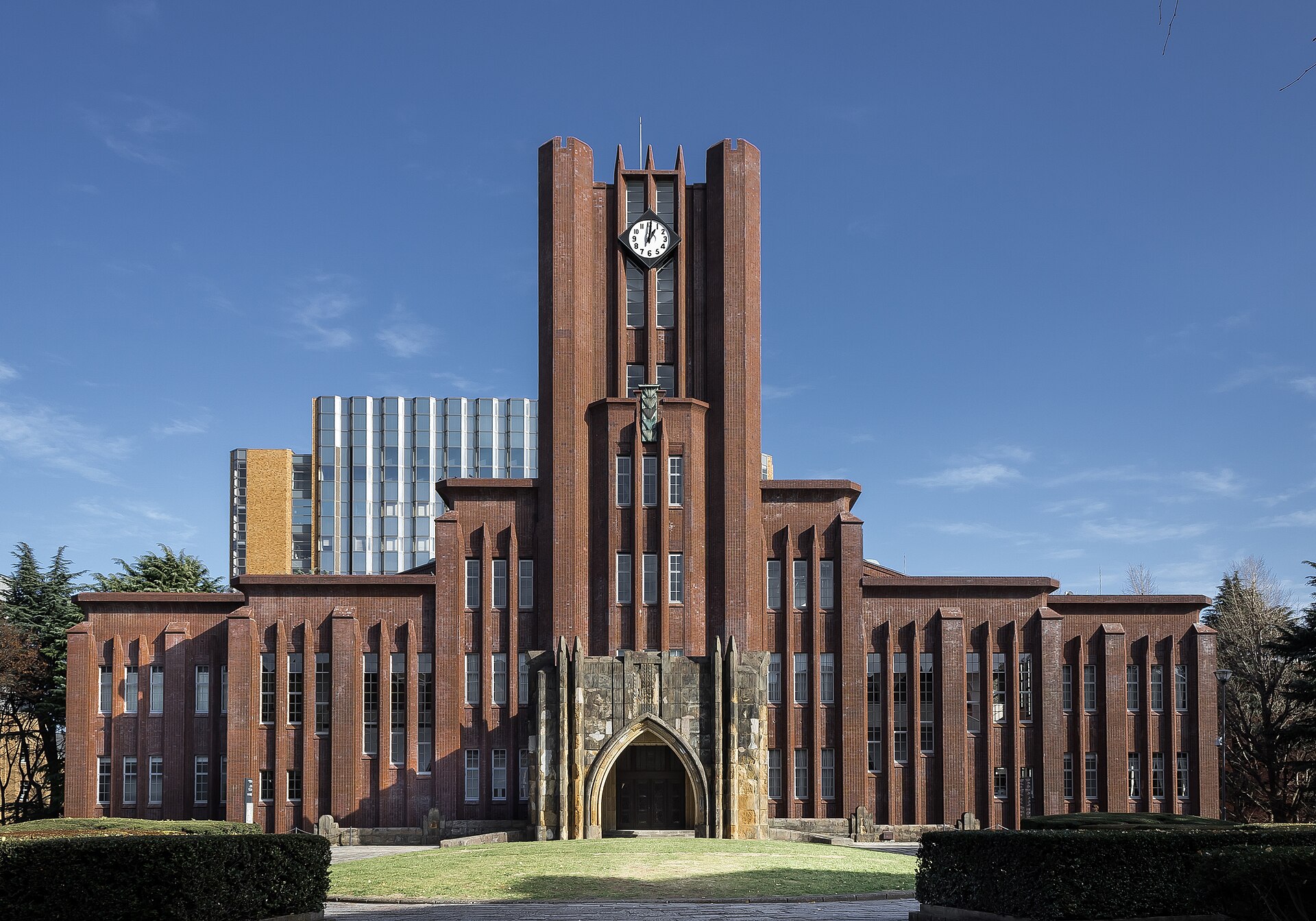

Kakidai · CC BY-SA 4.0 · Display cropped
It sets your entrance route, your prep time and your work options.
Study in Japan · Basic Guide 2025–2026Up to eight hours a day in long school holidays.
Study in Japan · part-time jobsJASSO's 2023 survey average, excluding study and research costs.
Study in Japan · living costs and expenses01 / YOUR STARTING POINT
Choose the closest match. Use it to plan your next checks, not as an admission decision.
English-taught undergraduate programmes usually recruit on documents, essays and interviews. Japanese-taught programmes typically expect the EJU and often the university's own examination as well.
JASSO · what is the EJUThe EJU is held twice a year, in June and November, in Japan and in a number of other countries. Missing a sitting can move your entry by a full year, so work backwards from the exam date.
02 / THE REAL COST
Sector, city and the one-off first-year charges do most of the work.
Published guidance puts a first undergraduate year at roughly ¥820,000 at a national university, ¥930,000 at a local public university and ¥1,100,000 at a private university, rising to about ¥3,200,000 for private medicine, dentistry and pharmacy. Those first-year figures include a one-off admission fee.
Study in Japan · academic feesJASSO's 2023 survey puts average monthly expenditure at about ¥105,000 nationally, with average rent around ¥41,000 and Tokyo rent around ¥57,000. Where you study changes the annual number more than what you study.
Study in Japan · living costs and expensesJapanese tenancies commonly ask for a refundable deposit and a non-refundable payment to the landlord, plus agency fees, before you hold the keys. Ask what is refundable and what is not, and keep the two apart in your plan.
Study in Japan · living costs and expenses03 / MAKE THE NUMBERS YOURS
Change the example figures to match your shortlist. See the expenses and the cash you may need to set aside.
An illustrative first year at a national university, in Japanese yen. Tuition uses the standard national-university annual amount and the fees line holds the one-off first-year admission fee, which you pay once rather than every year — remove it when you model year two. Monthly living uses JASSO's 2023 national average of ¥105,000, which is below a realistic Tokyo figure. Arrival covers flights, insurance, residence procedures and setting up a room. The deposit assumes a refundable tenancy deposit only; any non-refundable key money is an additional cost, not a deposit. The ¥535,800 tuition and ¥282,000 admission figures are illustrative standard national-university reference amounts, not a quote from the University of Tokyo shown above. Universities can charge more; the admission fee is normally a first-year item.
YOUR FIRST-YEAR PICTURE
Living costs × 12 + tuition + other fees + arrival costs. The deposit is added separately as money to set aside.
This example deducts no unawarded scholarship or income from a job you have not secured.
04 / FUNDING THE MOVE
Start with an affordable study plan. Then explore funding that matches your background.
Japanese Government scholarships come through an embassy recommendation or a university recommendation, in seven categories. Coverage includes a monthly stipend of roughly ¥117,000 to ¥145,000 depending on category, tuition exemption and return airfare. You cannot apply to the ministry directly.
Read the MEXT routesJASSO’s privately financed student scholarship is normally arranged through the institution. Award rates and academic, language and financial conditions depend on the category, including a separate language-school rate. Ask the international office about the current call and nomination places.
Check JASSO scholarshipsMany Japanese universities operate tuition exemption or reduction for international students separately from named scholarships, and strong EJU results can attract an award on enrolment. Get the criteria, the proportion reduced and the renewal conditions in writing.
Compare academic feesSTUDY. WORK. UPSKILL.
Understand the study-related options, then prepare for the next stage.
Students may work up to 28 hours a week, and up to eight hours a day during long school holidays, but only after obtaining permission to engage in activity other than that permitted under their status of residence. Adult entertainment work is prohibited by law.
Study in Japan · part-time jobsMost graduates change to a work status such as Engineer, Specialist in Humanities or International Services, which requires a job related to your field of study. If you have not found a role, you can change to Designated Activities for job hunting — granted for six months with a single extension, normally totalling one year under the standard route.
Study in Japan · changing status of residenceEven on an English-taught degree, employers hiring in Japan will ask about your Japanese. Some routes set explicit bars — one Designated Activities category requires JLPT N1 or a high Business Japanese Test score. Start early and keep it going through your course.
Study in Japan · status of residence for employment05 / FROM INTEREST TO ACTION
Start at the step that matches where you are. Course dates and your circumstances set the pace.
Decide between English-taught, Japanese-taught, or a preparatory year, and commit to one.
Study in Japan · Basic Guide 2025–2026June and November sittings set the whole timeline for Japanese-taught entry.
JASSO · what is the EJUName the laboratory, read the output and write to the academic, not the office.
The Certificate of Eligibility stage depends on credible, documented funding.
Study in Japan · Basic Guide 2025–2026Admission fee, tenancy move-in costs, insurance and travel, separately from tuition.
Study in Japan · academic fees06 / KEEP YOUR PLAN CURRENT
Reviewed guidance and official publishers to follow as your plan develops.
J-FIND
J-Find is limited to graduates of universities ranked in the top 100 of two or more of three world rankings, within five years of graduation, with ¥200,000 available at the start of the stay. Most graduates of Japanese universities use the ordinary job-hunting route instead.
Immigration Services Agency · J-Find guidanceReviewed 10 September 2026JOB HUNTING
The Designated Activities status for continued job hunting after graduation is granted for six months and can be extended once, for a maximum of one year. Plan your search to start well before you graduate rather than after.
Study in Japan · changing status of residenceReviewed 10 September 2026For the latest published notices, visit Study in Japan · JASSO. Read the date, eligibility and deadline on each announcement.
The reviewed guidance above is a dated reference. New announcements do not automatically change the page’s advice.
THE QUESTIONS THAT MATTER
Useful answers to bring into your next conversation.
Yes, at a number of Japanese universities. Check the language of compulsory modules, laboratory work, seminars and the thesis separately, because programmes described as English-taught are not always English throughout. Everyday Japanese remains useful outside the classroom.
Study in Japan · Basic Guide 2025–2026YOUR NEXT MOVE, WITH STAAR
Tell us where you are today. We’ll help you explore what comes next.
SOURCE NOTES
Reviewed 10 September 2026. Course, funding and immigration rules can change. Use the current rules for your nationality, residence and intake.
First-year fee figures for national, public, private and language institutions.
Study in Japan · living costs and expensesJASSO 2023 survey averages for monthly expenditure and rent.
Study in Japan · part-time jobsThe 28-hour limit, holiday hours, the required permission and prohibited work.
Study in Japan · status of residence for employmentWork statuses after graduation and the field-of-study requirement.
Study in Japan · changing status of residenceChanging to a work status and the job-hunting Designated Activities period.
Study in Japan · Basic Guide 2025–2026Official overview of study routes, the education system, the EJU and the application timeline.
Study in Japan · MEXT scholarshipsEmbassy and university recommendation routes, categories and coverage.
Study in Japan · JASSO scholarshipsThe monthly grant for privately financed international students.
JASSO · what is the EJUSubjects, examination languages, June and November sittings and how universities use scores.
Immigration Services Agency · J-Find guidanceJ-Find eligibility, the two-year maximum and the ¥200,000 requirement.