
Choose your language
English- and Korean-taught routes
Check the department’s admission and graduation requirements.
Study in Korea · language requirements and TOPIKSTUDY ABROAD / KR
시작이 반이다 / Sijagi banida — beginning is half the task.
From a Seoul design studio to an engineering research lab, Korea offers a new rhythm for your next chapter. Compare English- and Korean-taught degrees, a language-first start and the funding that could make your course possible.
Guide checked · Official sources
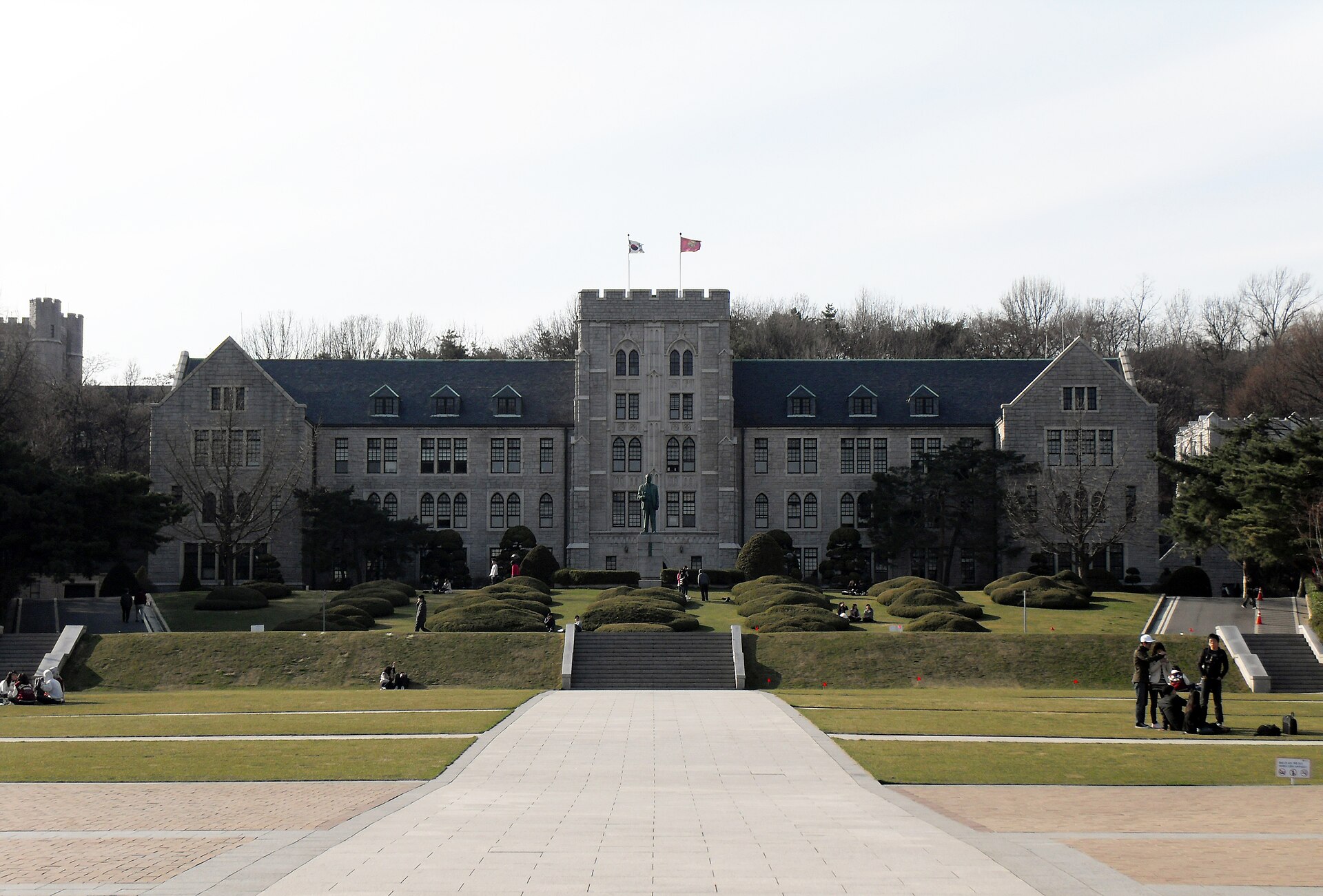
Ksiom · CC BY-SA 3.0 · Display cropped
Check the department’s admission and graduation requirements.
Study in Korea · language requirements and TOPIKDegree, language and institutional conditions affect your allowance.
Study in Korea · part-time employment for foreignersOne-year extensions, subject to approval and activity restrictions.
Korean Ministry of Justice · D-10 improvements, December 202501 / YOUR STARTING POINT
Choose the closest match. Use it to plan your next checks, not as an admission decision.
Korean universities admit international undergraduates on documents, school results and language evidence. Requirements are set department by department, so two courses at the same university can ask for different things.
Study in Korea · language requirements and TOPIKAsk about the language of required modules and graduation requirements. Everyday Korean can make campus and working life easier.
02 / THE REAL COST
Tuition, the housing deposit and the gap before you can legally work.
Published annual averages run from about KRW 6,003,000 for humanities and social sciences to KRW 7,277,200 for engineering and KRW 9,843,400 for medicine, with national and public universities averaging around KRW 4,266,000 and private universities around KRW 7,625,000. Ask your department for its own figure.
Study in Korea · study expensesCompare a university dormitory quote with a private lease, including upfront deposits. The KRW 5,000,000 calculator deposit is an editable private-housing assumption, not an official minimum or a verified campus charge.
Study in Korea · living and housing informationObtain approval before working. D-2 degree students and D-4 language students have different start conditions. Do not assume that every student must wait six months, or that TOPIK is the only accepted evidence.
Study in Korea · part-time employment for foreigners03 / MAKE THE NUMBERS YOURS
Change the example figures to match your shortlist. See the expenses and the cash you may need to set aside.
An illustrative first year for a private-university programme in Seoul, in Korean won. Tuition sits near the published private-university average and should be replaced with your department's own figure — engineering and medicine are materially higher. Monthly living assumes off-campus rent, food, transport and insurance; a dormitory place would reduce it. The KRW 5,000,000 deposit is an illustrative private-housing allowance, not a published requirement. Confirm the deposit and refund terms from an actual lease; the housing source does not substantiate this example amount.
YOUR FIRST-YEAR PICTURE
Living costs × 12 + tuition + other fees + arrival costs. The deposit is added separately as money to set aside.
This example deducts no unawarded scholarship or income from a job you have not secured.
04 / FUNDING THE MOVE
Start with an affordable study plan. Then explore funding that matches your background.
GKS covers airfare, language training, tuition and a living allowance, but you apply through a Korean embassy or through a designated GKS university — not directly to NIIED. Undergraduate cycles are typically announced around September and graduate cycles around February and March.
Read the GKS tracksMost Korean universities operate their own admission and continuing scholarships for international students, and a higher TOPIK level frequently raises the award band. Ask for the percentage reduced, the renewal grade and whether it applies to every semester.
Compare study expensesTreat earnings as uncertain. Keep tuition, living costs and housing deposits covered without a job offer.
Check the work rulesSTUDY. WORK. UPSKILL.
Understand the study-related options, then prepare for the next stage.
Prior permission is required. The official table distinguishes language evidence, degree level, academic year and university conditions; lower allowances also exist without the listed language proficiency. Confirm your exact row with the international office.
Study in Korea · part-time employment for foreignersFor eligible graduates of Korean universities, the Ministry of Justice’s updated D-10 scheme allows up to three years of job seeking, with one-year extensions. Approval and activity restrictions still apply; it is not permission to take any job.
Korean Ministry of Justice · D-10 improvements, December 2025Use projects, internships and language practice to build a credible portfolio during your course. Confirm the immigration conditions for the professional role you want; admission to an English-taught degree does not settle that question.
Study in Korea · employment in Korea05 / FROM INTEREST TO ACTION
Start at the step that matches where you are. Course dates and your circumstances set the pace.
Decide the level you need for admission, for work permission and for graduation.
Study in Korea · language requirements and TOPIKLanguage evidence, documents and deadlines are set department by department.
Study in Korea · language requirements and TOPIKIndian academic documents usually need apostille, and it takes longer than the visa itself.
Apply for a dormitory place and price a one-room tenancy with its deposit as a fallback.
Study in Korea · living and housing informationAdmission letter, education proof, financial ability and the tuberculosis test result.
Study in Korea · student visa and stay status06 / KEEP YOUR PLAN CURRENT
Reviewed guidance and official publishers to follow as your plan develops.
WORK CONDITIONS
Programme, language evidence and institutional conditions affect student work. Confirm the allowance applying to you and obtain permission first.
Study in Korea · part-time employment for foreignersReviewed 10 September 2026D-10 · UPDATED SCHEME
The Ministry of Justice’s December 2025 update extends the maximum job-seeking period to three years for qualifying Korean-university graduates, with one-year extensions.
Korean Ministry of Justice · D-10 improvements, December 2025Reviewed 10 September 2026For the latest published notices, visit Study in Korea. Read the date, eligibility and deadline on each announcement.
The reviewed guidance above is a dated reference. New announcements do not automatically change the page’s advice.
THE QUESTIONS THAT MATTER
Useful answers to bring into your next conversation.
English-taught programmes are available. Verify the language of compulsory modules and graduation requirements. For work, check the separate permission rules and accepted language evidence.
Study in Korea · part-time employment for foreignersYOUR NEXT MOVE, WITH STAAR
Tell us where you are today. We’ll help you explore what comes next.
SOURCE NOTES
Reviewed 10 September 2026. Course, funding and immigration rules can change. Use the current rules for your nationality, residence and intake.
D-2 and D-4 categories, permitted stay and required documents.
Study in Korea · part-time employment for foreignersHour limits by degree level and TOPIK level, and the permission requirement.
Korean Ministry of Justice · D-10 improvements, December 2025Domestic-university graduates: maximum three-year job-seeking period, extended one year at a time.
Study in Korea · study expensesAverage annual tuition by sector and by field of study.
Study in Korea · language requirements and TOPIKTOPIK structure, alternatives accepted and two-year score validity.
Study in Korea · scholarshipsGKS coverage, embassy and university tracks and application timing.
Study in Korea · living and housing informationDormitory and off-campus housing options and deposit practice.
Study in Korea · employment in KoreaProfessional work statuses and what employers expect of graduates.