
DKK 7,426 a month
Financial self-support, 2026 level
Capped at DKK 89,112 for study longer than a year.
New to Denmark (SIRI) · higher educational programmesSTUDY ABROAD / DK
Arbejdsglæde / Arbejdsglæde — 'joy in work'. The Danish idea that work should be something you actually like doing.
Bring a question. Build an answer together. From Aarhus’s campus park to Copenhagen’s design studios, Denmark makes space for discussion, practical projects and ideas worth trying. Explore the degree that fits your way of learning—and the opportunities attached to it.
Guide checked · Official sources
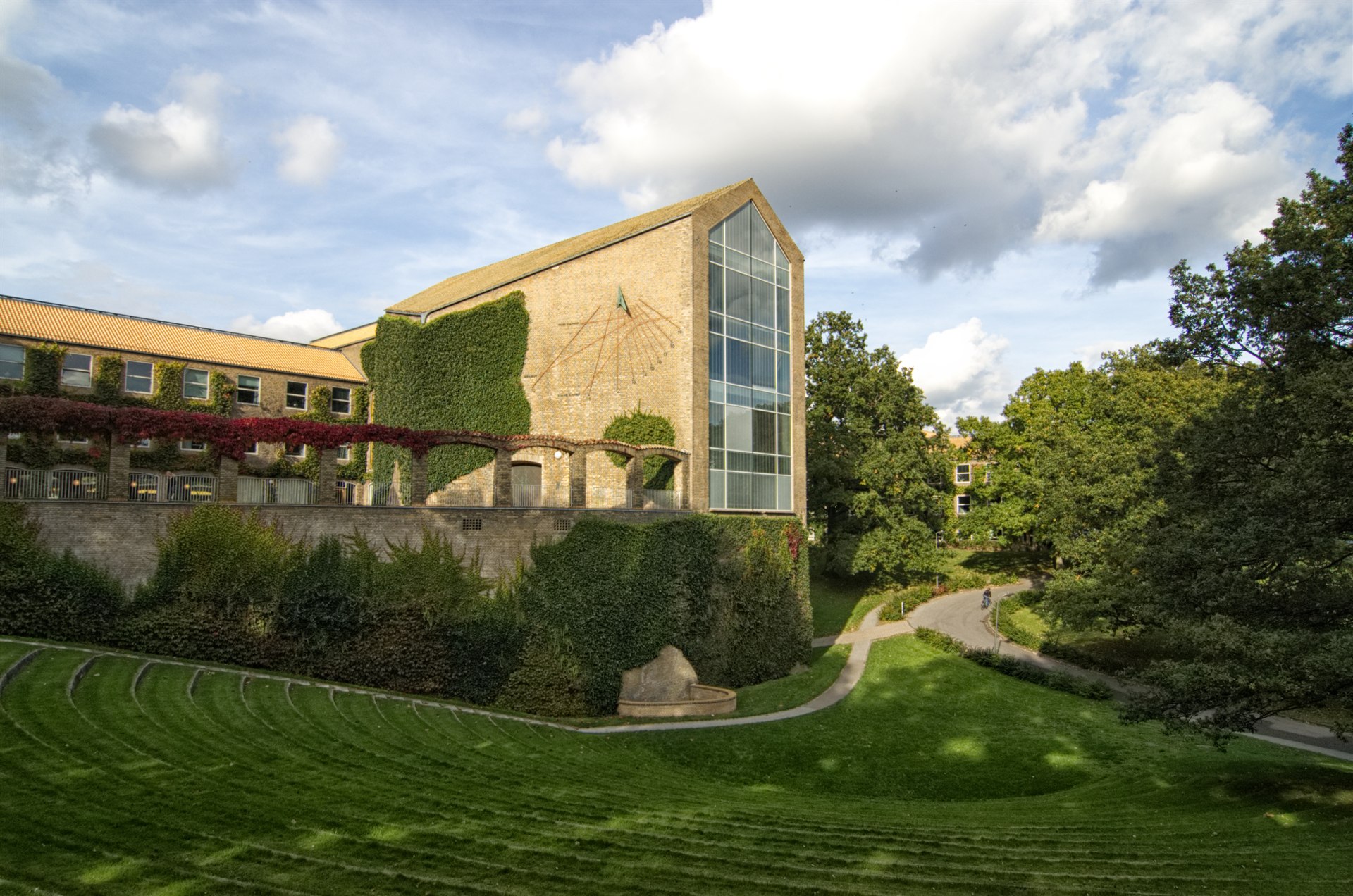

Mikkel Houmøller · CC BY-SA 4.0 · Display cropped
Capped at DKK 89,112 for study longer than a year.
New to Denmark (SIRI) · higher educational programmesState-approved higher education; full time in June–August.
New to Denmark (SIRI) · higher educational programmesEligible state-approved degrees; other categories differ.
New to Denmark (SIRI) · job-seeking permit for 3 years after graduating01 / YOUR STARTING POINT
Choose the closest match. Use it to plan your next checks, not as an admission decision.
Danish higher education is taught at universities, university colleges and business academies. All can be good; they are not all approved the same way, and the approval decides what happens after you graduate.
New to Denmark (SIRI) · higher educational programmesState approval and qualification type both matter. Do not assume an EVA advisory statement includes work or graduate-search permission; new applications from 2 May 2025 lost those entitlements.
02 / THE REAL COST
Tuition, the funds you need to document and the conditions attached to your course.
One large Danish university publishes 2026/2027 international master's tuition at EUR 13,000 a year for arts, business and social sciences and EUR 17,300 for science, technology and health, and notes that rates can change even for enrolled students. Ask which currency your contract uses and whether the figure is fixed.
Aarhus University · current tuition fee ratesYou must document DKK 7,426 a month at the 2026 level, with the maximum documentation required for study longer than a year set at DKK 89,112. Paying the first semester's tuition can substitute for this evidence. It is a threshold, not a forecast of what living in Copenhagen or Aarhus costs.
New to Denmark (SIRI) · higher educational programmesEligible state-approved professional bachelor, bachelor, master and PhD programmes can lead to up to three years of job search. Certain other categories receive six months. New non-state-approved EVA programme applicants from 2 May 2025 receive no graduate-search entitlement.
New to Denmark (SIRI) · higher educational programmes03 / MAKE THE NUMBERS YOURS
Change the example figures to match your shortlist. See the expenses and the cash you may need to set aside.
Illustrative first year for a non-EU master’s student. Tuition uses EUR 13,000 at an assumed planning rate of 7.50 DKK/EUR, giving DKK 97,500; this is not a live rate. Aarhus publishes programme-specific fees, including higher-cost fields. Replace the tuition and conversion with your actual offer and payment rate. Arrival includes the DKK 3,060 application fee and setup costs. Living and rental deposit are assumptions; return of the deposit depends on the tenancy.
YOUR FIRST-YEAR PICTURE
Living costs × 12 + tuition + other fees + arrival costs. The deposit is added separately as money to set aside.
This example deducts no unawarded scholarship or income from a job you have not secured.
04 / FUNDING THE MOVE
Start with an affordable study plan. Then explore funding that matches your background.
These are for citizens of countries outside the EU, the EEA and Switzerland who are enrolled in full-degree programmes on a time-limited study residence permit. They fund full or partial tuition waivers, grants towards living costs, or both. There is no central application: each university receives a limited annual allocation and runs its own selection.
Ask your institutionDanish institutions frequently publish international tuition in euros while you will pay and live in kroner. One university states explicitly that annual rates are subject to change, including for enrolled students. Get the figure, the currency and the change policy in writing before you accept.
Compare tuition ratesThe study permit allows 90 hours a month from September to May and full-time work in June, July and August — generous by international standards, but it cannot replace documented self-support, and Danish study is contact-heavy. Fund the year first.
Read the permit conditionsSTUDY. WORK. UPSKILL.
Understand the study-related options, then prepare for the next stage.
A study residence permit for a state-approved programme allows work of up to 90 hours a month during the normal period of study from September to May, and full-time employment through June, July and August. The permission is attached to the permit rather than applied for separately.
New to Denmark (SIRI) · higher educational programmesEligible state-approved degrees can lead to up to three years for job search. Certain qualifications, including Academy Profession programmes, have a six-month category. New non-state-approved EVA applicants from 2 May 2025 do not qualify. Check what was included with your study permit before applying separately.
SIRI · job-seeking permit categoriesA job-search permit initially has limited work rights. Eligible graduates can apply for permission to work without the usual hour limit during that period. Longer residence based on employment has separate requirements. Check benefits, absence and passport-validity conditions too.
SIRI · job-seeking permit categories05 / FROM INTEREST TO ACTION
Start at the step that matches where you are. Course dates and your circumstances set the pace.
Check state approval, qualification type and your application date together.
New to Denmark (SIRI) · job-seeking permit for 3 years after graduatingMany institutions publish in euros; you will pay and live in kroner.
Aarhus University · current tuition fee ratesDanish Government Scholarships are handed out by the institution, not the government.
Study in Denmark · scholarshipsStudy applications currently cost DKK 3,060: normally two months, or up to three if more information is needed.
New to Denmark (SIRI) · higher educational programmesDanish rental deposits are commonly around three months' rent, payable before you move in.
06 / KEEP YOUR PLAN CURRENT
Reviewed guidance and official publishers to follow as your plan develops.
PROGRAMME APPROVAL
An EVA advisory statement alone no longer provides work and graduate-search rights for applicants from 2 May 2025. Ask for the current SIRI category of your exact programme before accepting.
New to Denmark (SIRI) · higher educational programmesReviewed 12 September 20262026 LEVEL
The documented financial self-support figure is set at DKK 7,426 a month at the 2026 level, capped at DKK 89,112 for study of more than a year, and the application fee is DKK 3,060. These are published levels that change periodically — check the current figure at the date you apply.
New to Denmark (SIRI) · higher educational programmesReviewed 12 September 2026For the latest published notices, visit SIRI · New to Denmark. Read the date, eligibility and deadline on each announcement.
The reviewed guidance above is a dated reference. New announcements do not automatically change the page’s advice.
THE QUESTIONS THAT MATTER
Useful answers to bring into your next conversation.
Not for most international students. Citizens of countries outside the EU, the EEA and Switzerland pay tuition, published by one large university at EUR 13,000 to EUR 17,300 a year for master's programmes depending on the field. Confirm your own figure and currency with the institution.
Aarhus University · current tuition fee ratesYOUR NEXT MOVE, WITH STAAR
Tell us where you are today. We’ll help you explore what comes next.
SOURCE NOTES
Reviewed 12 September 2026. Course, funding and immigration rules can change. Use the current rules for your nationality, residence and intake.
Accreditation requirement, self-support figures, language, work allowance and the application fee.
New to Denmark (SIRI) · job-seeking permit for 3 years after graduatingQualifying awards, the three-year and six-month distinction, timing, work rules and revocation.
Study in Denmark · scholarshipsDanish Government Scholarship eligibility, coverage and institution-led allocation.
Aarhus University · current tuition fee ratesPublished 2026/2027 international master's rates in euros and the note that rates can change.
Study in Denmark · official portalProgramme search, institution types and general guidance for international applicants.
SIRI · job-seeking permit categoriesSix-month and three-year categories and conditions for work during the search.